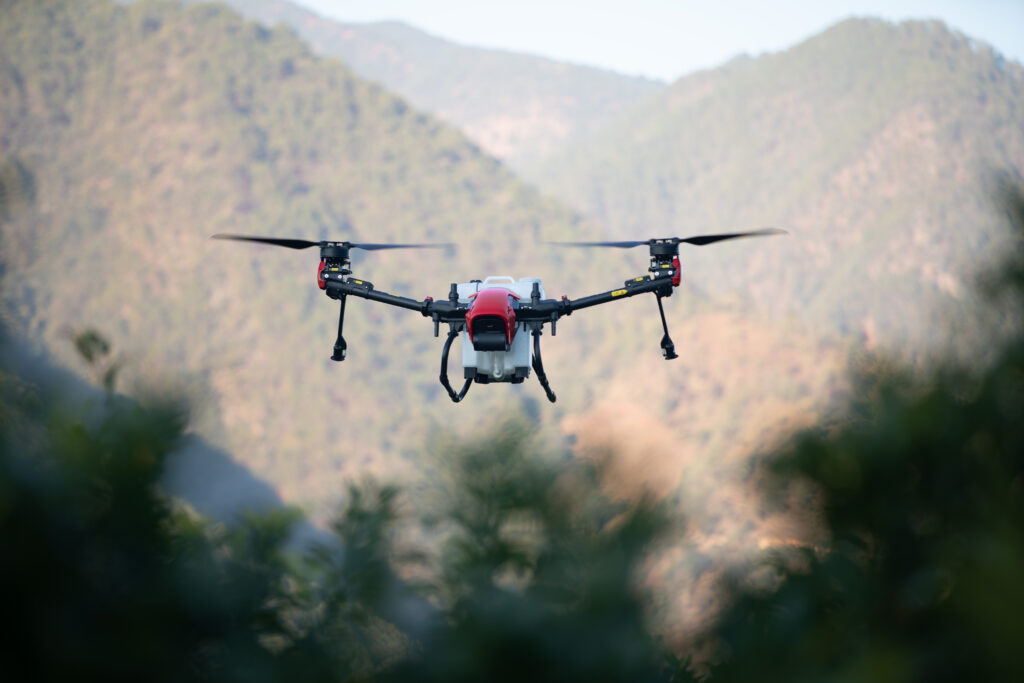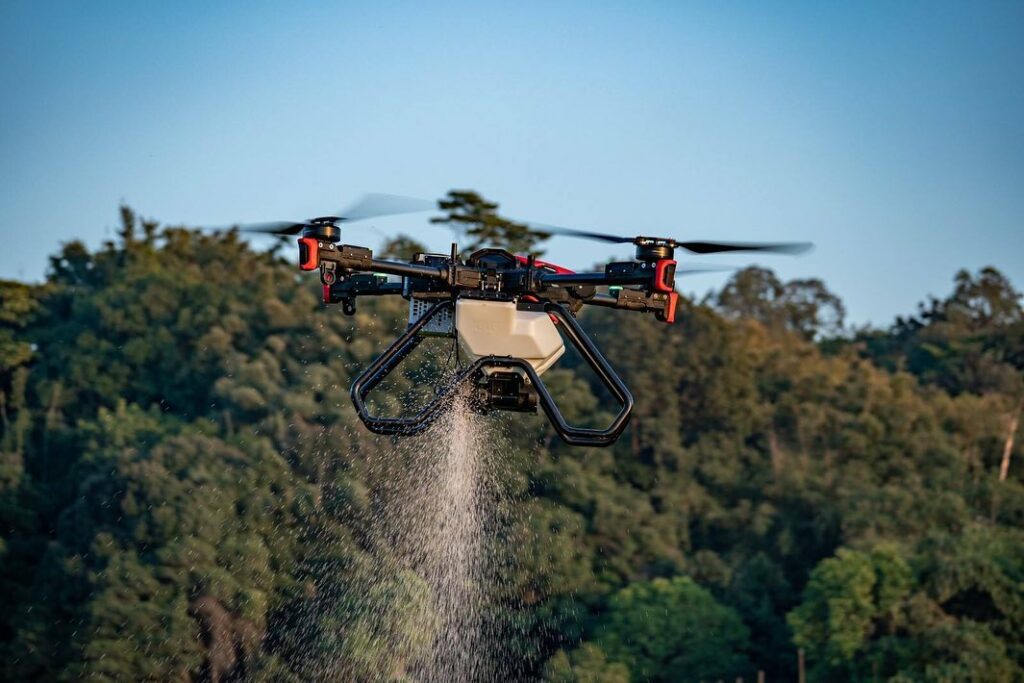
Drone Fertiliser Spreading on Broken Hill Country: The XAG P150 – Max
This job actually started as a dinner table conversation with my dad.
I asked him, mostly out of curiosity, what it had cost to put fertiliser on his farm by plane the previous year. He dug out the invoice, and the figure was $315 per tonne. That was in May 2025, and it genuinely surprised me.
With fuel, maintenance, insurance and aircraft running costs all heading the way they are, it would be fair to expect that number to have moved since then. Even a 10% increase would put it closer to $350 per tonne, and depending on the job, the true current cost could easily be higher.
So we decided to run an experiment.
Could we take an XAG P150 Max, match that old aircraft rate, and see how drone spreading stacked up in real New Zealand hill country?
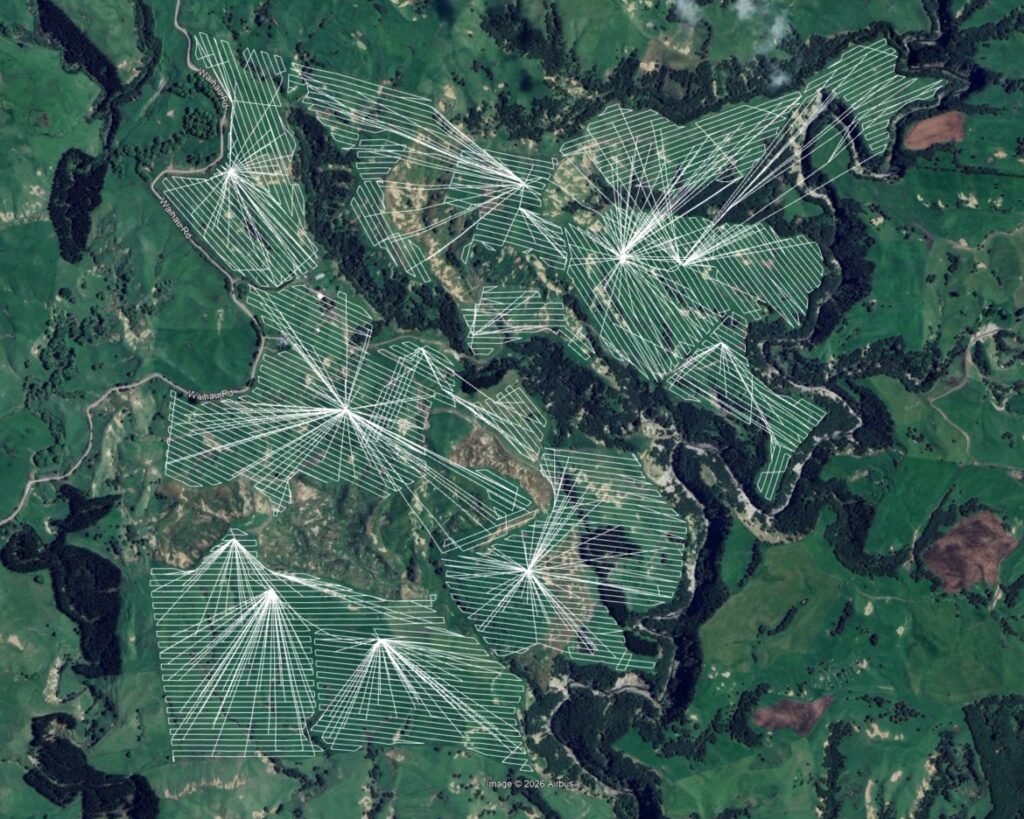
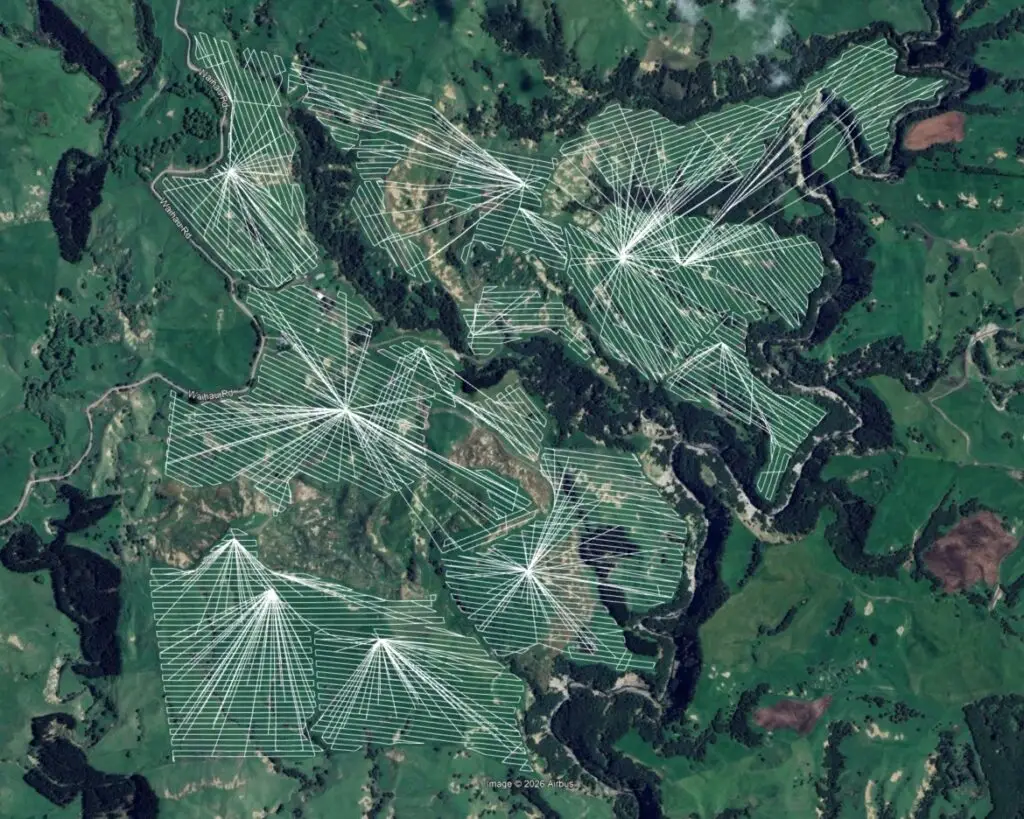
This was not a flat paddock trial. It was the farm I grew up on — 360 hectares in total, with around 235 hectares effective once pine trees, riparian planting, tracks, gullies and other non-productive areas are taken out. It is steep, broken, awkward country, which made it exactly the sort of place where accuracy really matters.
Dad ordered 17.5 tonnes of fertiliser in one tonne bags. We took our fertiliser loader, set up the P150 Max with the spreading system, and got started.
Accuracy was the biggest surprise
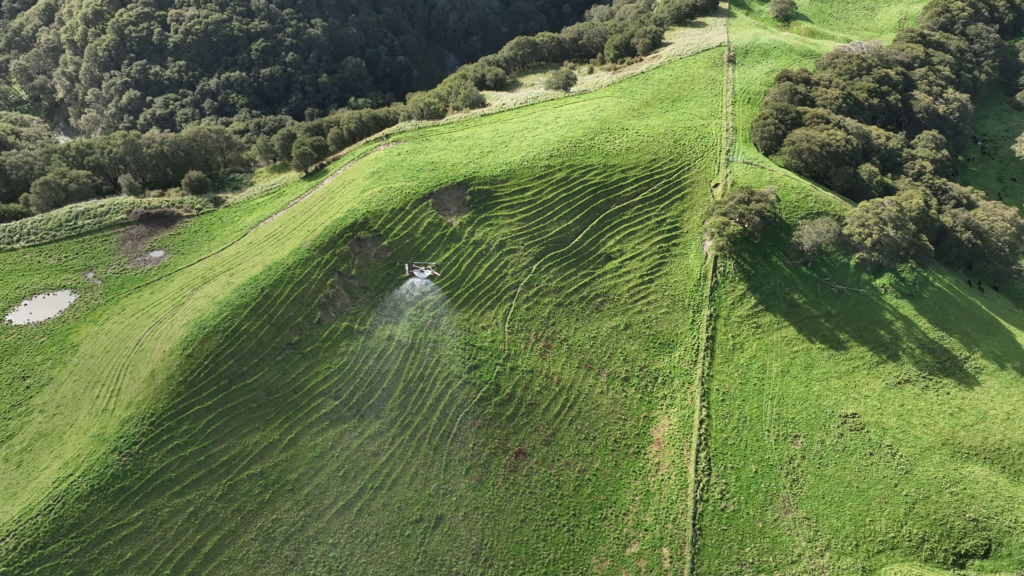
The biggest thing we noticed was not simply that the drone could spread the fertiliser. We already knew it could do that. What stood out was how well it could keep the fertiliser away from the places it should not go.
On this farm, pasture often sits hard against pine trees, tracks and riparian planting. In some areas there may only be a few hundred metres of productive pasture between two areas where you do not want fertiliser, so the ability to stop and start accurately becomes very important.
With the drone, we could turn spreading on and off with a level of control that is difficult to achieve with a fixed-wing aircraft. The drone slows down, stops spreading, turns, and comes back for the next run. That sounds basic, but on broken country it makes a big difference.
During the job, Dad had to walk about half an hour to pick up another vehicle. While he was walking along one of the tracks, he noticed something he had not really seen before. On the pasture side, fertiliser was dotted right up to the edge of the track. On the pine tree side, it had stopped.
That was probably the moment the accuracy difference really stood out.
A Cresco or similar topdressing aircraft may be travelling at around 120 knots, or roughly 220 km/h. No matter how good the pilot is, and no matter how good the technology is, you cannot expect an aircraft moving at that speed to turn product off within a few metres every time.
On this job, the difference was obvious. With aircraft spreading in this sort of country, edge accuracy might easily be 20 metres either way. That can mean fertiliser going through the track and into pine trees, or the first part of the pasture edge missing out altogether. With the drone, we could place the product much closer to where it was actually needed.
That also means less wasted fertiliser. On a broken farm, product going onto pine trees, tracks, waterways or riparian areas is product the farmer has paid for, but the pasture never gets the benefit of. In a season where every input cost matters, that is a pretty important part of the equation.
How we made it work
The key to making the job work was not just the drone itself. It was the whole system around it.
We moved a lot, using the tractor and ute to keep shifting our loading zone and making the most of high points around the farm. That was one of the biggest factors in keeping the job productive, because if the drone has to climb 20 or 30 metres on every load before it even starts working, productivity drops away quickly.
On this type of country, the loading point matters. Being prepared to move more often can actually save time overall, because the drone spends more of its time spreading and less of its time climbing, travelling or working inefficiently.
We also turned terrain following off for this job. For spraying, terrain following is a major part of the system, but for this type of spreading job it would have seriously hurt productivity. We wanted the drone working at speed, carrying full loads, and making the most of each run.
For this job, we ran 80 kg loads and kept the drone moving fast. The point is to use the payload properly. If you are flying fast, you want the spreader full so you are getting real utilisation out of the machine rather than doing lots of half-productive trips.
We also followed the correct aviation process for the job. In this type of country, if you are operating from a high point and sending the drone out across steep terrain, it is easy to end up above the normal 400 ft limit above ground level in places. For this job, we operated under the correct procedures in our manual and completed the required NOTAM process where needed.
That is an important point. These jobs are very achievable, but they still need to be planned properly and carried out in accordance with the rules.
One drone, then two
On the first day, we focused on running one drone. We wanted to see what we could safely squeeze out of a single machine and get a proper feel for the true productivity in that terrain.
On the second day, we brought two drones, and in future that will likely be the better setup for this style of work. What seemed to work well was keeping one drone close to the loading zone, where it could keep pushing through the more productive nearby work, while the second drone handled the longer, fiddlier runs 700 metres to a kilometre away.
That approach meant we did not have to move the loading zone as often, and each drone could be used where it made the most sense. On a farm with everything from small three-hectare blocks through to blocks closer to 40 hectares, that flexibility made a real difference.
We completed the job over two big days. They were long days, but for one of the more awkward farms you could choose to test on, it gave us a very clear picture of where drone spreading fits.
Loading speed is everything
One thing we confirmed very quickly is that spreading fertiliser with drones is not just about the aircraft. It is about the loading system.
If the drone is sitting on the ground waiting for fertiliser, productivity drops quickly. Ideally, we want the downtime on the ground to be under 30 seconds, because every extra minute spent loading is a minute the drone is not spreading.
We tested our own fertiliser loader and tried a few different loading methods. There were some good points and some things we still want to improve, but we deliberately avoided using buckets because that is not where the long-term efficiency will come from.
There is still a lot of room to improve the loading side of drone spreading. Better loading means more tonnes per hour, less time on the job, and a lower cost per tonne while still keeping the job commercially viable. That will probably be a blog of its own, because it is a big part of making drone spreading work properly.
Cost is not the whole story
If we were doing this as a normal contracting job, we would likely need to charge somewhere around $500 to $600 per tonne, depending on travel, terrain, tonnage, loading setup and how broken the job is.
So no, we are not saying drone spreading is automatically cheaper than a plane on a straight contractor per-tonne rate. Aircraft still have a very important place, and for big, open, simple jobs with good runs and large tonnage, a plane is extremely efficient.
But broken hill country is different.
Here, the value is not just in the spreading rate. It is in the accuracy, timing, access and reduction in wasted product. If a portion of the fertiliser is going into pine trees, waterways, tracks or other non-productive areas, that cost needs to be considered as well.
If you own the drone yourself, the calculation changes again. For a farm of this size, or for a group of farms working together, the operating cost can sit well below a modern aircraft spreading rate, especially once you factor in fertiliser saved by not spreading non-productive areas.
Timing is another major advantage
One of the underrated advantages of drone spreading is timing.
Nitrogen timing matters. If the conditions are right, you often want to get the job done now, not when an aircraft happens to be available.
At the moment, in many regions, there are only a small number of aircraft servicing large areas. For hill country, a Cresco is often the most cost-efficient aerial option, while helicopters are useful but generally more expensive.
If you own a drone, you can choose the right day and get the job done yourself. You can also stagger applications if that suits the farm system better. For example, on a dairy farm, you could follow the cows and do 10 or 20 hectares a day without too much trouble, instead of needing to complete the whole job in one aircraft booking.
That sort of flexibility is hard to put a value on until you have it.
Good use of days you cannot spray
This job was also done in conditions where we would not normally be spraying.
There were passing showers and some wind, but that is not necessarily a problem for fertiliser. With spreading, you can often operate in conditions that would keep a spray drone in the shed.
For contractors, that is a major point. Fertiliser spreading may not always return the same as spraying, but it can make use of days where the drone would otherwise not be earning. Over a season, that extra utilisation matters.
There is also the fuel side of it. A Cresco might burn somewhere around 180 litres of jet fuel per hour, so a job like this could easily involve several hundred litres of fuel.
For our job, between driving around the block, using the ute and tractor, and running our charging setup, I would estimate we used around 50 litres of petrol. We also used our battery pack for a lot of the charging.
That is a significant reduction in fuel use for this type of job.
Final thoughts
This job started with a simple question over dinner: what does it actually cost to put fertiliser on this farm?
By the end of the job, we had a much clearer answer.
Drones are not going to replace every plane or helicopter in agricultural spreading, and they do not need to. Aircraft are still the right tool for a lot of jobs.
But on broken hill country, where there are pine trees, tracks, waterways, riparian areas and awkward pasture shapes, the value of accuracy becomes very obvious. For us, the biggest takeaway was not just that the XAG P150 Max could spread the fertiliser. It was how precisely it could keep the fertiliser on the productive country.
That is where the opportunity is.
More accurate placement, less wasted product, better timing, better access to difficult blocks, and a spreading system that will only become more productive as loading equipment improves.
This was only one job, but it gave us a very good look at where drone spreading fits in New Zealand hill country.
And we think there is a lot more to come.
If you are looking at drone spreading for your farm or contracting business, get in touch with Airborne Solutions. We use these machines in the field ourselves and can talk through where they make sense, where they do not, and what sort of setup you would need to make the numbers work.